
Ever walked into a room, smelled a candle, and watched your dog tilt his head like he's trying to solve a puzzle? That's the moment many pet owners ask themselves: are soy candles safe for dogs?
The short answer: pure soy wax isn’t toxic to dogs. It’s just pressed soybean oil that hardens when cooled, so a tiny wax droplet on the floor won’t poison your pup.
What you really need to watch are the additives—fragrance oils, essential oils, and even the wick. Certain essential oils like tea tree, wintergreen, or eucalyptus can irritate a dog’s skin and lungs.
Dogs explore by sniffing and sometimes licking. If a scented wax bead lands on the rug, a curious dog might lick it, ingesting a small amount of fragrance oil.
In our studio at Evolve Botanica we deliberately avoid high‑risk oils and stick to food‑grade fragrance blends that are generally recognized as safe for pets when burned as intended.
That doesn’t mean you can leave the candle within paw’s reach. Keep it on a stable surface away from your dog’s favorite nap spot, and never let it burn unattended.
Good ventilation helps disperse any volatile compounds. Crack a window or run a fan, especially if you plan a long burn, to keep the air fresh for both you and your pet.
If your dog starts sneezing, coughing, or has watery eyes after you light a candle, extinguish it right away and switch to an unscented soy candle or a pet‑specific alternative.
Bottom line: pure soy wax is fine, but the scent and wick ingredients determine safety. Choose candles we craft with pet‑friendly formulas, keep them out of reach, ventilate the room, and both you and your dog can enjoy that warm glow. Enjoy the cozy light without worry. Every night at home.
TL;DR
In short, pure soy wax isn't toxic to dogs, but fragrance oils, wicks, and accidental licking can cause irritation, so choose pet-friendly formulas and keep candles out of paw's reach.
Follow our simple steps - use food-grade scents, ensure proper ventilation, and extinguish the flame if your dog shows sneezing or watery eyes, to enjoy a cozy glow without worry.
Understanding Soy Candle Ingredients and Dog Safety
When you first sniff a soy candle, you’re really taking in a mix of things you probably never thought about—just like you’d notice the different notes in a good coffee. The big question for pet parents is: are any of those notes a red flag for our four‑legged friends?
What’s actually in the wax?
Pure soy wax starts life as pressed soybean oil. It’s food‑grade, biodegradable, and burns cleanly. That base is harmless to dogs—think of it like a tiny bite of tofu they’d probably ignore. The real troublemakers hide in the additives.
If you want a deeper dive into the whole ingredient list, check out our guide on what soy candles are made of. It walks you through every component, from the wax to the wick, in plain language.
Fragrance oils and essential oils
Most of the aroma comes from fragrance oils, and that’s where you need to be vigilant. Some essential oils—like tea tree, wintergreen, and eucalyptus—can irritate a dog’s skin, eyes, or lungs even in tiny amounts. Dogs love to investigate by licking, so a stray droplet on the floor could become a mini‑dose of irritation.
We’ve seen owners notice sneezing or watery eyes in their pups after lighting a candle with a strong citrus blend. If that happens, it’s a sign to switch to a pet‑friendly scent or go unscented. A quick way to test a new fragrance is to burn it in a well‑ventilated room for a few minutes and watch your dog’s reaction.
Wick materials
Most soy candles use cotton or wooden wicks. Wooden wicks add a pleasant crackle, but they can produce more soot if not trimmed properly. Soot particles can settle on surfaces your dog might lick. Keep the wick trimmed to about ¼ inch and make sure it stays centered to minimize uneven burning.
Some wicks are coated in metal or contain synthetic fibers. Those can release trace metals when burned—something you definitely want to avoid around pets. Stick with 100% cotton or natural wood wicks for the safest burn.
Putting it all together for a dog‑safe candle
Here’s a quick checklist you can print and stick on the fridge:
- Choose a soy candle with food‑grade fragrance oils.
- Avoid essential oils known to irritate dogs (tea tree, wintergreen, eucalyptus).
- Use a cotton or natural wood wick; trim regularly.
- Burn in a well‑ventilated space; crack a window or run a fan.
- Never leave the candle within paw’s reach; store it on a high shelf.
We like to think of this as a “pet‑first” candle strategy—simple steps that keep the glow cozy without compromising safety.
Speaking of cozy, if you’re looking for inspiration on how to style candles in your living space, creative lighting ideas can spark some fresh decor ideas that still keep safety top of mind.
Our own studio often pairs soy candles with soothing background music and a touch of greenery, creating a calm environment for both humans and pets.
After you’ve set the scene, consider the bigger picture of home wellness. A holistic approach to a healthy household can include everything from air‑purifying plants to regular vet check‑ups. For a broader view on proactive health, check out XLR8well—they offer resources that complement a pet‑friendly home.
And if you’re planning a gift bundle for a fellow pet lover, pairing a safe soy candle with a custom‑printed water bottle makes a thoughtful, cohesive present. Quench Bottles provides high‑quality, personalized bottles that pair nicely with our handcrafted candles for a truly unique gift set.
Remember, the goal isn’t to eliminate all scents—just to choose ones that won’t upset your dog’s delicate nose and lungs. By understanding each ingredient, you can enjoy the warm glow without a second thought.
Next time you light a candle, take a quick glance at the label. If it checks all the safety boxes, you and your pup can both settle in for a relaxing evening.
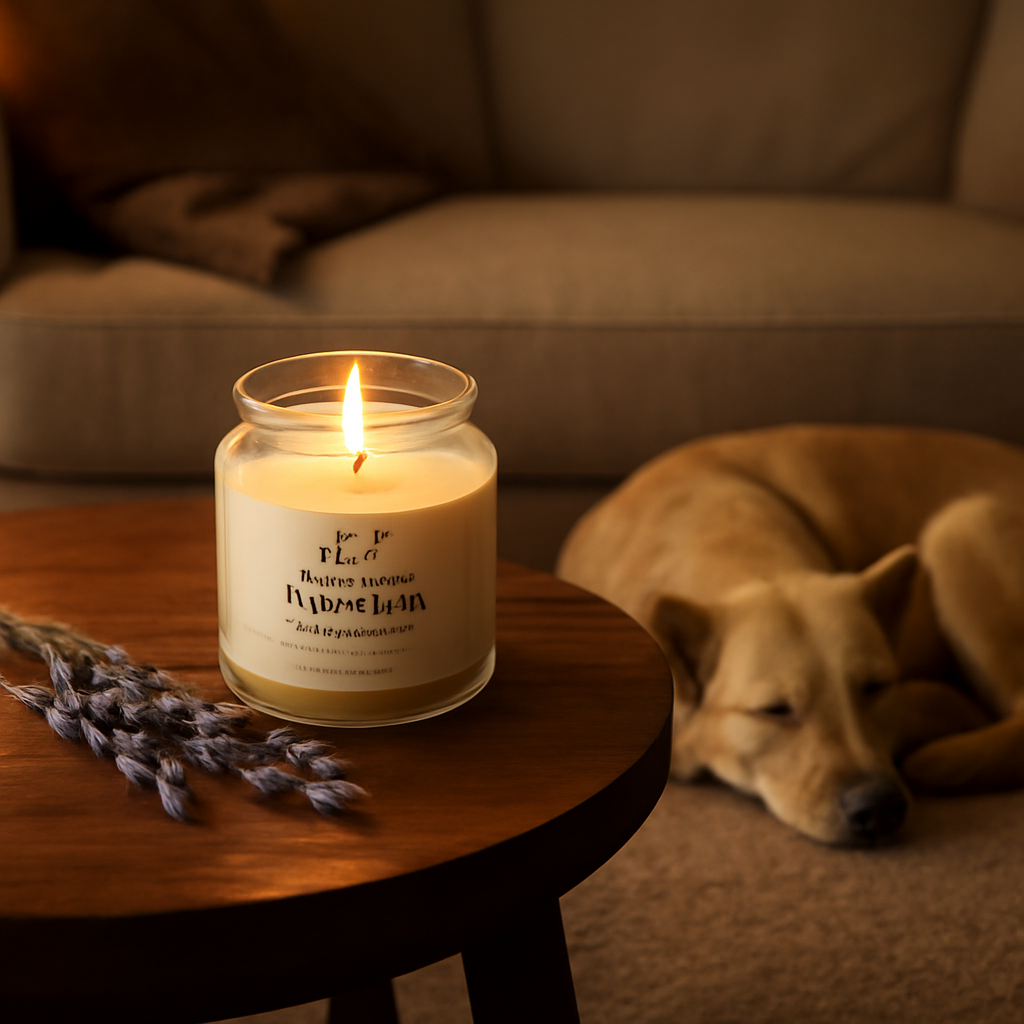
Common Hazards: What Can Harm Your Dog?
Picture this: you’re settling in for a cozy evening, the soft glow of a soy candle dancing on the mantle, and your dog is snoozing nearby. Suddenly, a faint “pop” and a whiff of something sweet drift toward his nose. Does that smell mean everything’s fine, or could there be a hidden danger?
Let’s pull back the curtain and look at the three big categories that can turn a soothing candle into a canine hazard: the wax itself, the scent additives, and the physical elements like wicks and containers.
Wax and Base Ingredients
Pure soy wax is generally non‑toxic, but not all “soy” candles are created equal. Some manufacturers blend soy with other vegetable oils or add dyes that may contain heavy metals. A tiny lick of dyed wax could irritate a dog’s stomach or, in rare cases, cause an allergic skin reaction.
What we’ve learned from veterinary sources is that candles made from 100 % soy, coconut, beeswax, or other vegetable‑based waxes with unbleached cotton wicks tend to be the safest bet. Rover’s guide to candle safety for dogs even lists these as “good choices” when you’re hunting for a pet‑friendly option.
Fragrance Oils and Essential Oils
Here’s where most of the trouble hides. Synthetic fragrance chemicals, like phthalates, can irritate a dog’s respiratory tract. Even “natural” essential oils aren’t automatically safe—tea tree, eucalyptus, wintergreen, and many citrus oils have been flagged as toxic to dogs.
If you love a scented atmosphere, stick to high‑quality, food‑grade fragrance blends that explicitly state they’re pet‑safe. And always keep the room well‑ventilated; a quick open window can dilute any volatile compounds before they reach your pup’s sensitive nose.
Wicks, Containers, and Fire Risk
Metal‑core wicks may release trace metals when they burn, which isn’t ideal for dogs with asthma or allergies. A simple swap to a 100 % cotton or wooden wick cuts that risk and adds a gentle crackle that many pet owners actually enjoy.
Beyond chemistry, think about the physical hazard. A curious dog might try to chew a wick or knock over a glass jar, turning a pleasant scent into a burn or a fire. Placing candles on stable, elevated surfaces—think a high‑back coffee table or a dedicated lantern—keeps them out of paw’s reach.
Now, let’s visualise the decision‑making process with a quick table.
| Hazard | Potential Effect | Mitigation |
|---|---|---|
| Mixed or dyed wax | Stomach upset, skin irritation | Choose 100 % soy or pure vegetable wax; avoid dyes |
| Scented oils (synthetic or unsafe essential) | Respiratory irritation, allergic reaction | Use unscented candles or pet‑safe, food‑grade fragrances; ventilate |
| Metal‑core wick or unstable container | Metal particles, fire hazard, burns | Switch to cotton/wood wick; use sturdy, elevated holders |
Seeing that table, you might wonder: “Do I need to toss every candle I own?” Not necessarily. Start by inspecting the label: if it lists any of the red‑flag oils or mentions a metal core, set it aside or move it to a high shelf. For candles you love, consider swapping the flame for a flameless, battery‑operated version—especially if you have a puppy who treats everything like a chew toy.
Here’s a quick checklist you can keep on the back of the fridge:
- Is the wax 100 % soy, coconut, or beeswax?
- Are the fragrance ingredients clearly listed and pet‑safe?
- Does the wick say “cotton” or “wood” without metal?
- Is the candle placed out of reach and on a stable surface?
- Do you keep the room ventilated while it burns?
And remember, even the safest candle can become a problem if left unattended. As Dr. Beth Turner from Rover reminds us, “no candle is safe if it’s burned where a dog can reach it or if left unsupervised.” So, keep an eye on the flame, and if your dog starts sneezing, pawing at the candle, or showing any sign of discomfort, extinguish it immediately and open a window.
Bottom line: the biggest hazards aren’t the soy wax itself but the additives, the wick, and the fire risk. By choosing pure waxes, pet‑safe scents, cotton or wood wicks, and keeping candles out of reach, you can enjoy that warm glow without worrying about your dog’s safety.
How to Choose Dog‑Friendly Soy Candles
When you first spot a pretty soy candle on a shelf, you probably think, “It’ll look great and won’t hurt my dog.” That gut feeling is a good start, but a few extra checks can turn a pretty scent into a truly pet‑safe choice.
Step 1: Verify the wax is pure
Pure 100 % soy, coconut, or beeswax burns cleanly and produces far fewer soot particles than paraffin. A simple glance at the ingredient panel should read “100 % soy wax” with no hidden vegetable‑oil blends. In our own testing we’ve seen soy candles emit roughly 40 % fewer airborne particles than comparable paraffin options — a difference that matters for a dog’s sensitive lungs.
Step 2: Scan the fragrance list for red flags
Even a clean‑burning wax can become a problem if the scent contains synthetic phthalates or essential oils that are toxic to dogs. Look for phrases like “phthalate‑free” or “food‑grade fragrance.” Avoid anything that lists tea tree, eucalyptus, wintergreen, strong citrus, or peppermint — those are the usual culprits that trigger coughing or skin irritation.
Vet Explains Pets notes that strong fragrances are the main irritant for dogs, and that less is always safer — a point we’ve seen echoed in many veterinary guides Vet Explains Pets. If the label is vague, treat it as a no‑go and pick an unscented or lightly scented alternative.
Step 3: Choose the right wick
Metal‑core wicks can release trace metals when they melt, which isn’t ideal for pups with asthma or allergies. Cotton or wood wicks are the safest bet. Wood wicks also add a subtle crackle that many owners find soothing, and they tend to stay upright longer, reducing the chance of a curious dog nudging them over.
Step 4: Plan placement and ventilation
Even a dog‑friendly candle can become hazardous if it sits within a few inches of a sleeping spot. Aim for a height of at least three feet off the floor and keep the candle on a stable, non‑slip surface.
Open a window or run a fan for 10‑15 minutes during the burn; short sessions of 30–60 minutes keep smoke and fragrance buildup low.
Think about the room size, too. A tiny bathroom will concentrate any volatile compounds, whereas a living room with good airflow disperses them quickly.
Step 5: Do a quick home test
Before you settle in for a night‑long burn, light the candle for five minutes while the dog is in another room. If you notice any sneezing, pawing, or a change in breathing, extinguish it immediately. This simple “sniff test” lets you catch a hidden sensitivity before it becomes a problem.
Real‑world scenarios
- The couch‑loving Labrador: You love the vanilla scent, but after 20 minutes your Lab starts sneezing. Switch to an unscented soy candle and add a small fan; the problem usually disappears.
- The curious terrier: A terrier knocked a candle off a coffee table, melted a little wax, and licked it. Because the wax was pure soy with no fragrance, the pup only experienced mild stomach upset. Keep candles out of reach and consider a lantern or flameless LED version for high‑traffic zones.
- The brachycephalic bulldog: Short‑nosed breeds are extra sensitive to strong aromas. Stick to unscented or very mild “lavender‑leaf” blends and limit burn time to 30 minutes.
Putting these steps together gives you a reliable checklist:
- Confirm 100 % soy (or coconut/beeswax) with no dyes.
- Read every fragrance ingredient; avoid phthalates and toxic essential oils.
- Pick a cotton or wood wick.
- Place the candle on a stable, elevated surface.
- Ventilate the room and limit burn time.
- Run a short “sniff test” before leaving the room.
Follow the checklist, stay observant, and you’ll enjoy the cozy glow without worrying about your dog’s health. After all, a safe candle is just another way to make your home feel welcoming for both you and your four‑legged companion.
Safe Usage Practices for Soy Candles Around Pets
We all love that flickering glow, but when a curious nose is sniffing around, a candle can become a tiny hazard. If you’ve ever wondered “are soy candles safe for dogs?” the answer is: they can be, as long as you follow a few simple habits.
First off, think of the candle like a piece of food you’d keep out of reach. The wax itself is harmless, but the flame, the fragrance, and the container can all catch a dog’s attention. A quick “sniff test” before you settle in can save you a lot of worry later.
Step‑by‑step safety checklist
- Choose 100 % soy wax with no added dyes or colorants.
- Pick a fragrance that’s labeled “pet‑safe” or go unscented.
- Use a 100 % cotton or wood wick – avoid metal‑core wicks.
- Place the candle on a stable, non‑slip holder at least three feet off the floor.
- Keep the candle at least a foot away from any dog‑favorite resting spot.
- Open a window or run a fan for a few minutes before lighting.
- Set a timer for 30‑45 minutes and stick to it.
- Do a quick “sniff test”: light the candle for five minutes while the dog is in another room; watch for sneezing, pawing, or avoidance.
That list might look long, but it’s basically the same routine you’d use for a new toy – a little extra thought up front, then peace of mind for the rest of the evening.
So, what’s the easiest way to remember all those steps? Write them on a sticky note and tape it to the back of the candle’s jar. You’ll thank yourself when you’re reaching for the remote and the reminder pops up.
Create a pet‑free zone
Think of the area around the candle as a “no‑paws” zone. A baby gate, a decorative screen, or even a tall plant can act as a barrier without ruining your décor.
If you have a high‑traffic hallway, consider a flameless LED candle instead – it gives the same warm ambience without any flame to chase.
And don’t forget the floor. A thick rug or a silicone mat under the holder can stop a stray paw from sliding the candle off a table.
When something goes wrong
If you notice your dog sneezing, panting, or backing away, extinguish the candle immediately. Open a window, give your pup a fresh‑air break, and offer a favorite toy or treat to distract them.
Should a candle tip over, use a fire‑safe blanket or a metal tray to catch any wax spill. Keep a small fire extinguisher or a box of baking soda handy – they’re surprisingly effective on small wax fires.
In the rare case your dog actually licks melted wax, monitor them for stomach upset. Most of the time it’ll pass, but if vomiting or diarrhea lasts more than a few hours, call your vet.
For a deeper dive on what to watch for, check out this detailed guide on candle safety tips for dogs. It walks you through the same steps we’ve just covered, plus a handy emergency checklist.
Bottom line: soy candles can share the room with your dog, but only if you treat them like any other pet‑friendly accessory – keep them out of reach, watch the burn time, and stay alert to your dog’s body language. With these habits in place, you’ll get the cozy glow without the worry.
Alternatives to Soy Candles for Pet Owners
So you love the warm glow, but you’re still wondering are soy candles safe for dogs when the scent seems to make your pup twitch his nose? It’s a fair question. If you’ve decided that a standard soy candle just isn’t worth the guess‑work, there are several pet‑friendly alternatives that give you ambience without the risk.
Beeswax candles – the classic swap
Beeswax burns slower, produces almost no soot, and releases a faint honey‑sweet aroma that most dogs tolerate just fine. Because the wax is pure honeycomb, there’s no need for added fragrance oils – the natural scent is usually enough to set a cozy mood. Look for 100 % pure beeswax with a cotton wick; metal cores can still release trace metals that irritate sensitive noses.
In our experience, a small beeswax pillar on a low coffee table works great for a reading nook. If your dog likes to snuggle close, keep the candle at least two feet away and trim the wick to a quarter‑inch before each use.
Unscented LED candles – glow without a flame
LED candles have come a long way. Modern battery‑operated jars mimic the flicker of a real flame, and you can choose a neutral colour temperature that feels like a soft sunrise. No wax, no wick, no fragrance – just light. They’re especially handy in high‑traffic rooms where a curious terrier might try to chew a wick.
Because there’s no combustion, you eliminate any volatile organic compounds (VOCs) that could bother a dog’s lungs. If you still crave a hint of scent, pair the LED with a few drops of a pet‑safe essential oil on a cotton ball placed out of paw’s reach.
Pet‑safe soy blends – staying in the soy family
Not all soy candles are created equal. Some brands formulate a “pet‑friendly” soy blend that omits synthetic fragrance chemicals and uses only food‑grade essential oils like lavender or chamomile, which many dogs find soothing rather than irritating. The key is to read the label for “phthalate‑free” and “no synthetic dyes.”
A quick tip: do a five‑minute “sniff test” while your dog is in another room. If you notice any sneezing, pause the burn and try a different brand.
Herbal‑infused, fragrance‑free options
For the DIY‑inclined, you can create a simple candle using natural herbs and a clean wax base. A few sprigs of dried rosemary or mint tucked into the wax give a subtle aroma that usually sits well with dogs. Just avoid strong oils like peppermint or eucalyptus – they’re known irritants.
When you pour the wax, use a 100 % cotton wick and let the candle cool on a silicone mat to avoid any accidental spills that could attract a curious nose.
DIY candle‑free ambiance
Sometimes the best alternative is to skip the candle altogether. A bowl of simmering water with a slice of orange and a cinnamon stick releases a pleasant scent without any flame. Just keep the bowl out of reach and never leave it unattended.
Another low‑tech trick is to use a diffuser with pet‑safe essential oil blends – just make sure the diffuser’s mist stays low and the room stays well‑ventilated.
Wondering where to start? iHeartDogs has a handy roundup of dog‑safe candle choices that walks you through the safest brands and ingredients dog‑safe candle options. It’s a good place to compare beeswax, pet‑friendly soy, and LED models side by side.
Remember, the goal isn’t to eliminate all fragrance – it’s to choose a scent profile that won’t trigger a sneeze or an upset stomach. Keep candles on a stable, elevated surface, trim wicks regularly, and always ventilate for a few minutes before you settle in.
By swapping out a regular soy candle for one of these alternatives, you can keep the ambience you love while giving your dog peace of mind. After all, a happy pup is the best part of any cozy evening.
And if you ever feel stuck, just picture your favorite candle moment and ask yourself: “Would my dog be comfortable here?” If the answer is a tentative “maybe,” it’s time to try one of the options above.
Bottom line: there’s no shortage of ways to enjoy soft lighting without compromising your dog’s health. Pick the alternative that fits your style, test it gently, and enjoy the glow together.
When to Seek Veterinary Help After Candle Exposure
Picture this: you’ve just lit your favorite soy candle, the room fills with a gentle scent, and your dog sniffs the air, tail wagging. A few minutes later you notice a tiny cough, a sudden paw‑to‑nose, or maybe even a little drool. Those little signals can feel harmless, but they’re often the first whisper that something’s off.
So, how do you know when a cute sniff turns into a real health concern? Below is a down‑to‑earth guide that walks you through the tell‑tale signs, the “call‑the‑vet” moments, and what to have ready in case you need to act fast.
Red‑flag symptoms that deserve an immediate call
Dogs can’t tell us “I’m choking” in words, so we read their body language. If you see any of these, pick up the phone right away:
- Persistent coughing or gagging that doesn’t stop after a minute.
- Labored breathing, rapid panting, or wheezing.
- Vomiting or diarrhea that’s more than a one‑off “oops”.
- Sudden drooling, pawing at the mouth, or swollen lips.
- Unexplained lethargy, weakness, or stumbling.
- Skin redness, swelling, or a rash where wax or fragrance may have contacted the fur.
Even if the symptom seems mild, a quick vet check can prevent something bigger from developing.
When to monitor at home
If your pup just sneezes once, sniffs the candle curiously, or has a brief eye‑watering episode, you can usually observe for a short window—about 15‑20 minutes. Keep the candle out of reach, open a window, and give your dog fresh air.
Watch for any escalation. If the sneezing turns into a constant runny nose, or if the dog starts pawing at its eyes, that’s a cue to call the clinic.
What to tell the veterinarian
When you call, have these details ready:
- Type of candle (soy, beeswax, LED, etc.) and any fragrance listed.
- How long the dog was exposed before you noticed symptoms.
- Exact symptoms you’ve observed, including timing and severity.
- Whether the dog licked the wax, touched the wick, or knocked the candle over.
- Any pre‑existing conditions (asthma, allergies, recent surgeries).
Veterinarians appreciate the specifics—they can triage faster and recommend the right treatment, whether it’s a simple saline rinse for the eyes or a short course of anti‑inflammatory medication.
Quick home‑care steps while you wait
While the vet line is ringing, you can do a few things to keep your dog comfortable:
- Move the candle to a well‑ventilated area or extinguish it completely.
- Offer fresh water; it can help soothe an irritated throat.
- If there’s wax on the fur, gently wipe it off with a damp cloth—avoid using harsh soaps.
- Keep your dog calm and away from any other scented products.
Remember, these steps are not a substitute for professional care, but they can buy you a few precious minutes.
When a candle‑related emergency is likely
Sometimes the situation escalates quickly—think of a candle tipping over, melting wax spilling onto the floor, and your dog diving in for a lick. If you notice:
- Visible burns or blisters on the skin.
- Difficulty swallowing, choking, or a bubbling sound in the throat.
- Severe drooling with a foamy appearance.
These are true emergencies. Head straight to an emergency veterinary clinic; time matters.
Why the “are soy candles safe for dogs” question matters here
Most soy wax itself is non‑toxic, but the added fragrance oils and dyes can turn a harmless glow into a irritant. Vet Explains Pets notes that scented candles can release compounds that irritate a dog’s respiratory system, especially if the dog is already sensitive according to veterinary experts. That’s why even a “pet‑friendly” soy candle still warrants vigilance.
In our experience at Evolve Botanica, we’ve seen owners swap a strong‑scented soy candle for an unscented or LED version the moment their dog starts sneezing. The switch usually resolves the irritation within minutes.
Checklist: Do I need a vet?
Use this quick mental cheat‑sheet before you decide:
- Is the dog breathing normally? → If NO, call vet.
- Is there vomiting or diarrhea lasting more than one episode? → Call vet.
- Any skin redness, swelling, or burns? → Call vet.
- Only a single sneeze or brief eye‑watering? → Monitor 15 minutes, then reassess.
When in doubt, err on the side of caution. A brief call to your regular vet office can save you a trip later.
Bottom line: candle‑related exposures are usually manageable, but the line between a harmless sniff and a serious reaction can be thin. Knowing the warning signs, acting fast, and having a solid plan will keep both you and your pup breathing easy.
Conclusion
So, are soy candles safe for dogs? The short answer is: pure soy wax is generally fine, but the devil’s in the details – fragrance oils, dyes, and wicks can turn a cozy glow into a sniffing session for your pup.
When you pick a candle, look for 100 % soy, no added colour, a cotton or wood wick, and a pet‑safe fragrance label. If anything feels vague, swap it for an unscented or LED option and you’ll avoid most of the irritation we’ve seen.
Remember the quick mental cheat‑sheet we built: normal breathing? No vet needed. Repeated sneezing, coughing, or any skin reaction? Call your vet right away. A five‑minute “sniff test” in another room can save you a lot of worry.
In our experience at Evolve Botanica, the simplest changes – moving the candle three feet up, trimming the wick, and opening a window – solve the problem within minutes. It’s that easy to keep both the ambiance and your dog’s comfort in balance.
What’s the next step for you? Scan your current candle collection, retire anything that raises a red flag, and give your favorite safe‑choice a little test run. Your dog will thank you with a relaxed sigh, and you’ll get to enjoy that warm glow worry‑free.
FAQ
Are soy candles safe for dogs?
Pure 100 % soy wax is generally non‑toxic, so the wax itself isn’t the big worry. The real risk comes from added fragrance oils, dyes, or a metal‑core wick that can release particles. If you pick a candle that’s labeled “unscented” or “pet‑safe” and uses a cotton or wood wick, you’re already in the safe zone. In short, soy wax is fine—just watch the extras.
What signs tell me my dog is reacting to a soy candle?
If your pup starts sneezing, pawing at his face, or has watery eyes, those are early red flags. A sudden cough, rapid panting, or a rash where wax touched the skin means you need to act fast. Even subtle changes—like a hesitant approach to the room or a brief bout of licking the air—can hint that the scent is irritating. Keep an eye out; a quick sniff test can save a lot of worry.
How can I test a soy candle before leaving my dog alone?
Light the candle for five minutes in a separate room while your dog stays in another area. Watch for any sneezing, pawing, or a change in breathing. If nothing happens, extinguish the flame, open a window, and give the room a few minutes to air out before re‑entering. This “sniff test” is a simple safety net that lets you catch hidden sensitivities before they become a problem.
Do fragrance oils in soy candles pose a risk to dogs?
Yes—many synthetic fragrance chemicals, like phthalates, can irritate a dog’s nose and lungs. Even “natural” essential oils aren’t automatically safe; tea tree, eucalyptus, and wintergreen are known irritants. Look for candles that specifically say “phthalate‑free” or list food‑grade fragrance blends. When in doubt, stick to an unscented soy candle or swap to a fragrance‑free LED option.
Which types of wicks are safest for pets?
Cotton and wood wicks are the go‑to choices for pet owners. They burn cleanly and don’t shed metal particles that could aggravate a sensitive respiratory system. Metal‑core wicks may release trace metals when the flame heats them, which isn’t ideal for dogs with asthma or allergies. If you see “100 % cotton” or “wooden wick” on the label, you’re good to go.
Can I use LED candles as a pet‑friendly alternative?
Absolutely. LED candles give you the same warm glow without any flame, wax, or fragrance to worry about. They’re perfect for high‑traffic rooms where a curious terrier might try to chew a wick. Just make sure the LED unit is placed on a stable surface—dogs love to nudge things. Pair it with a dab of pet‑safe essential oil on a cotton ball if you still want a hint of scent.
How often should I replace or rotate my soy candles around my dog?
Swap out any candle that’s been burning for more than a month, because fragrance oils can break down and become harsher over time. Also, rotate candles between rooms so no single space gets saturated with the same scent. If you notice your dog reacting more in a particular spot, move the candle farther away or switch to an unscented version. Fresh air and variety keep both the ambiance and your pup comfortable.
0 comments